

products
 contact us
Tel:0411-84790015
021-60649094Address: Road of Huangpu Dalian high tech Park 782 3 floor No. 302
Mailbox:116023
Products/
location: > index > products
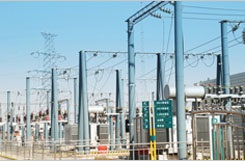
Power Quality SupervisoryDetection System
Product introduction:The system is an automatic monitoring network system for regional power grid power quality, which was established on the basis of the application of power quality online monitoring device of Xuji Group.

- Details
- pictures
1.1 System Overview
The system is an automatic monitoring network system for regional power grid power quality, which was established on the basis of the application of power quality online monitoring device of Xuji Group. Grid system experts control the dynamic change of grid system’s power quality data on the basis of the monitoring system in real time, providing the implementation of power quality’s comprehensive treatment project with valid data basis and feasible technical solutions.
1.2 System Construction
The system is composed of point-by-point power quality online monitoring device, front-end service data collector (complete real-time data service, historical data service), power quality observation station for several points, long-distance WEB server and so on. The system is coordinated with powerful analysis software for power quality data, realizing the analysis, statistics, calculation, report generation, historical data query of power quality data and the wave record event query of the power quality.
PC遠程訪問:PC remote access
客戶端檢測:Client end detection
客戶端監(jiān)測管理工作端:Client end monitoring and management working end
內(nèi)部網(wǎng)絡:Internal network
局域網(wǎng):Local area network(LAN)
服務器:Server
Web服務器:Web server
應用服務器:Application server
DB服務器:The DB server
前置數(shù)據(jù)服務中心:Front data service center
數(shù)據(jù)轉(zhuǎn)發(fā):Data forwarding
1.3 Core Functions
The system makes it possible for the functions such as the power quality information’s comprehensive online monitoring, statistics, analysis, estimation, returning to play. Details can be listed as follows:
1. Function of power quality index monitoring
The five power quality data indexes stipulated by the national standard include voltage deviation, frequency deviation, harmonic waves, voltage unbalance, voltage fluctuation and flicker.
The power quality data indexes stipulated by Institute of Electrical and Electronic Engineers (IEEE) include voltage sag, voltage interruption, short-term over-voltage, transient voltage and so on.
2. Function of full power monitoring
Providing the monitoring of system voltage, current, frequency, power, power factor, electricity quantity and other data, as well as the function of full power off-limit alarm and fault wave record. Full power data are saved to local file or database at the same time, and can be paged up for tendency analysis.
3. Function of voltage disturbance monitoring and analysis
Recording the data information of each voltage and current during each voltage disturbance online; providing the waveform analysis of each voltage and current during each voltage disturbance, and the tendency waveform analysis of voltage change. At the same time, it providesproviding a variety of industrial analysis methods such as ITIC curve analysis, SEMI curve analysis, and SARFI analysis, etc.
4. Function of transient voltage monitoring and analysis
Recording the information such as voltage and the duration when transient voltage occurs, and supplying the waveform analysis of transient voltage.
5. Function of harmonic wave monitoring and analysis
The system can monitor the content, amplitude, angle, power and other data of up to 50 times of harmonics and 50 times of inter-harmonics from all passages. Local and database storage is carried out to page up data for analysis in the form of tables or curves.
6. Function of comprehensive analysis
The system provides function of comprehensive analysis of power quality information for up to four levels including bureau, station, installation, monitoring point and so on. Data can be selected from all levels of nodes freely to integrate and generate a curve or statement output analysis report.
7. Function of WEB analysis
The system provides the customers with full WEB analysis functions which include real-time power quality information issue, historical power quality information query, statistics, statement, analysis and so on, analyzing the power quality information and results and being exported in the form of excel.
8. Function of replaying power quality events on the basis of map
Replaying the events occurred on the map according to the selected duration so that it is convenient for customers to analyze faults afterwards and find out the real reasons for power quality events.
1.4 The Applicable Scope of the Monitoring Terminal Device
According to the principles related to the layout of monitoring points in The Technical Specification of Power Quality Monitoring System issued by the State Grid Corporation, the following basic principles should be followed in the selection of power quality online monitoring points.
1) mainMain choices lie in the buses of voltage grades of key substations, substations surrounding DC grounding electrodes, and substations with power quality disturbance sources, as well as the outlets of the substation’s power quality disturbance source and the loop of reactive power compensation capacitor, etc. According to this principle, power quality online monitoring terminal device can be installed in the following access points:
(1) primaryPrimary key substations of 500kV, 200kV in the system
(2) systemSystem access points of the iron and steel enterprises of AC and DC electric arc furnaces, medium and high frequency furnaces, rolling, smelting, etc.
(3) systemSystem access points of electrified railways
(4) userUser access points of large rectifier equipment: filling in power stations of electric cars, water factories, telecommunication buildings, TV launch center, large commercial center, etc.
(5) userUser access points of a large number of spot welding machines and arc welding machines: vehicle manufacturers, mechanical processing factories, etc.
(6) gridGrid connection points of new energy power generation
(7) userUser access points of important load: airports, large hospitals, etc.
2)Thethe number of monitoring points should be adjusted with the development of power grid and load, should cover main websites and all the voltage levels of power supply, as well as should be distributed uniformly within the grid (geographic and the ends of lines). The harmonics, the three-phase voltage unbalance, and the flicker pollution levels of the local area should be reflected faithfully.
3) specialSpecial customers or customers ordered a contract of terms concerning power quality index.
1.5 Program Features
1. Network configuration is flexible,flexible; monitoring system’s wire connection is convenient.
Applying object-oriented unitized monitoring mode, each monitoring unit and monitoring center are combined to be monitoring system whose monitoring quantity can be adjusted flexibly according to the needs of customers.
2. Supporting plug-in communication agreement
The system provides up to 10 kinds of communication agreement, and suppliesy communication agreement interface based on standard, being convenient for the third party to access power quality devices.
3. Supporting the function of module data configuration
The system provides the functions of module configuration and pasting of passage data, which dramatically reduces the workload of user configuration.
4. Supporting a variety of international standards
The system provides the monitoring of voltage deviation, frequency deviation, power grid’s harmonic waves, voltage unbalance, voltage fluctuation and flicker;
With reference to European power quality standards at the same time, providing the monitoring of inter-harmonic, system carrier, and other power quality problems;
With reference to the power quality standards of the Institute of Electrical and Electronic Engineers (IEEE), it providesproviding the monitoring of voltage sag, voltage interruption, short-term over-voltage, transient voltage and other transient performance.











 Tel :
0411-84790015
Tel :
0411-84790015 Tel :
021-60649094
Tel :
021-60649094


